general
Hong Kong Developer Financial Pressure Hits Australian Projects — What Property Buyers and Mortgage Brokers Need to Know
Hong Kong developer financial pressure is delaying projects and reshaping risk for Australian off-the-plan buyers. This 1,800-word guide explains the liquidity squeeze, its impact on Sydney and Melbourne developments, mortgage approval challenges, and how brokers can protect clients.
Hong Kong Developer Financial Pressure Hits Australian Projects — What Property Buyers and Mortgage Brokers Need to Know
For the last three years, Hong Kong developer financial pressure has moved from a distant headline to a tangible risk on Australian soil. Projects in Sydney, Melbourne, and Brisbane that were launched with fanfare by Hong Kong–linked developers are now facing delays, restructured settlements, or in rare cases, voluntary administration. For mortgage brokers and buyers sitting on off-the-plan contracts, the liquidity squeeze has real consequences: valuation shortfalls, longer settlement timelines, and lenders tightening their criteria on certain developments.
This article breaks down where the pressure is coming from, which parts of the Australian market are most exposed, and how brokers can position clients to navigate the shift — without triggering panic or breaching responsible lending obligations.
Where the Liquidity Squeeze Started
Hong Kong developer financial pressure did not start in isolation. It sits at the intersection of three forces that have been building since 2021:
- Mainland Chinese property crisis spillover. Several large Hong Kong conglomerates run substantial operations across mainland China. As onshore developers defaulted on dollar bonds and residential presales collapsed, Hong Kong parent companies absorbed losses through equity writedowns and intercompany loan impairments. According to Moody’s, rated Hong Kong developers recorded a combined 18% decline in contracted sales from mainland operations in 2025 alone.
- Elevated Hong Kong dollar interest rates. Because the HKD is pegged to the USD, Hong Kong has imported the US Federal Reserve’s tightening cycle. Prime rates in Hong Kong climbed to 6.125% in early 2026, raising financing costs for developers that rely heavily on bank loans and dimming local residential demand.
- Refinancing walls in 2026–2027. S&P Global Ratings recently noted that Asian high-yield issuers face a $42 billion maturity wall across 2026 and 2027. Hong Kong real estate firms account for roughly 30% of that total. When bondholders demand higher yields and onshore cash cannot be easily repatriated, offshore subsidiaries — including Australian project vehicles — come under capital allocation scrutiny.
For a Sydney mortgage broker, this is not an abstract macro story. It translates directly into whether a project in Macquarie Park or Box Hill reaches practical completion on time, and whether a lender’s panel valuer marks down an apartment because the developer’s credit profile has weakened.
Australian Projects with Hong Kong Parentage: The Exposure Map
Contrary to popular belief, Hong Kong–linked developers are not marginal players in the Australian apartment market. They have been active for over a decade, often bringing capital from listed conglomerates, family offices, and joint-venture partners.
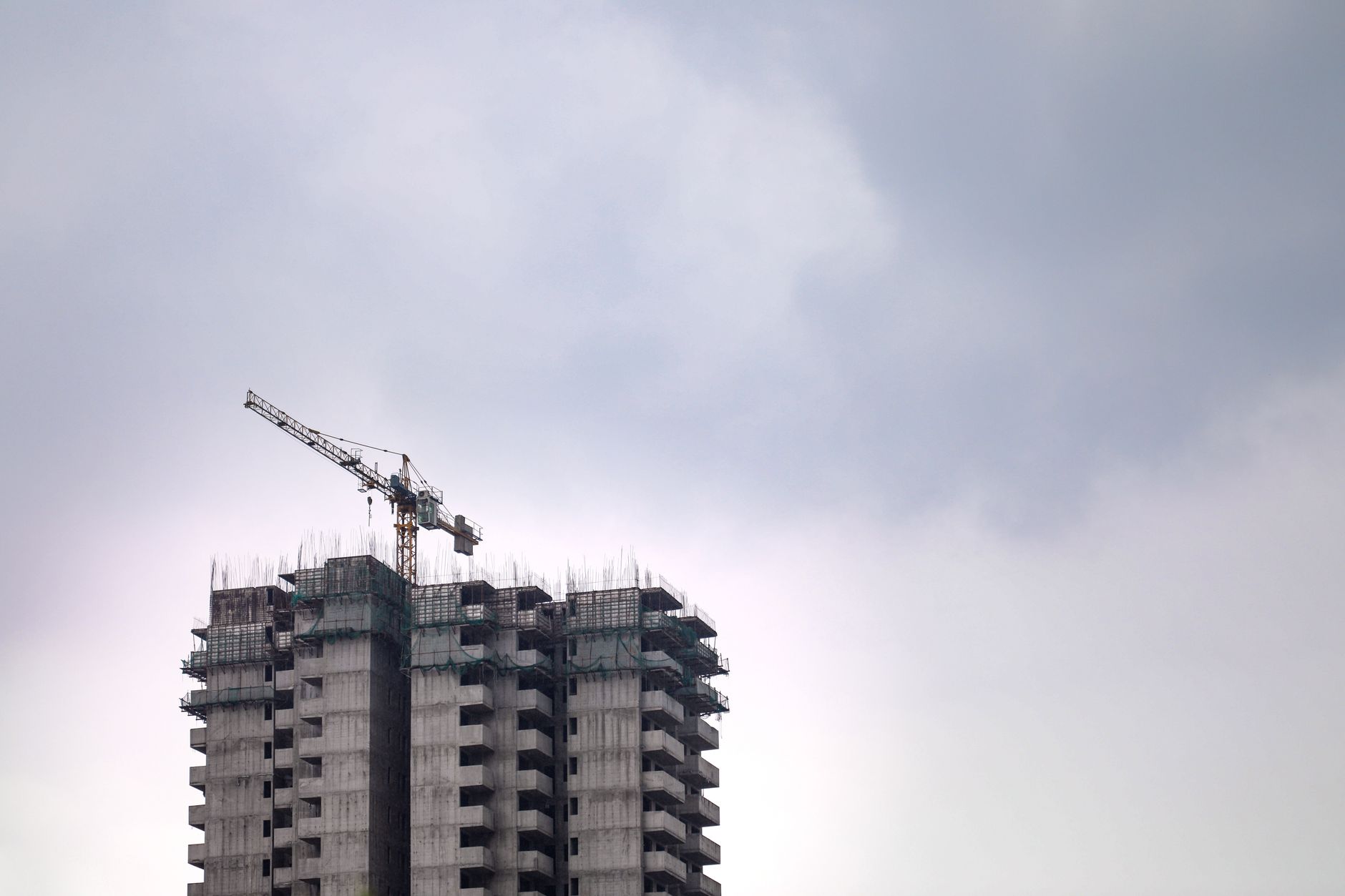
Some prominent names (none are clients of this publication, and we do not disclose non-public relationships) include subsidiaries of Hong Kong–listed groups with current or recent projects in Sydney’s Epping, North Ryde, Hurstville, Green Square, and Melbourne’s Southbank precinct. Many of these projects were marketed heavily to both local and offshore buyers between 2019 and 2023.
The exposure is especially concentrated in:
- Medium- to high-density off-the-plan apartments priced between $700,000 and $1.4 million.
- Mixed-use developments that require longer construction programs and higher upfront debt.
- Sites where presale thresholds are linked to construction loan milestones — meaning if a developer slows marketing spend to conserve cash, settlement risk rises for existing buyers.
Brokers who financed purchases in these postcodes over the last three years should actively track project status updates. A one-month construction delay rarely causes a mortgage problem; a six-month delay combined with a valuation drop, however, can break a deal.
What Hong Kong Developer Financial Pressure Means for Off-the-Plan Buyers
When a developer is under capital pressure, the effects rarely show up in a headline until it is too late. Buyers and brokers instead see a cascade of quieter signals:
1. Sunset Clause Extensions
Off-the-plan contracts in New South Wales, Victoria, and Queensland typically include a sunset date — the latest date by which the project must be completed. A developer facing funding shortfalls may request an extension well before that date arrives. In NSW, changes made to the Conveyancing Act in 2015 mean developers can no longer use sunset clauses to rescind contracts for purely opportunistic reasons, but an extension can still keep a buyer locked in for an extra 12–18 months while their mortgage pre-approval expires and rates drift.
2. Specification Substitutions
Cost-cutting on finishes, appliances, or common-area landscaping is often the first sign a developer is trying to protect its margin. Substitutions are lawful within certain contract boundaries, but they can reduce a completed apartment’s appeal and, ultimately, its valuation at settlement. Lower valuations create immediate top-up requirements for buyers.
3. Valuation Deterioration and LMI Barriers
Lenders rely on panel valuers who factor in developer reputation, project completion risk, and comparable sales in the same building. If a project has a rising number of resales by distressed contract-holders, valuations can soften even if the broader postcode is still performing. For buyers borrowing above 80% loan-to-value ratio, a valuation shortfall of just $50,000 can trigger Lenders Mortgage Insurance reassessment — or a straight decline from the insurer.
Brokers should stress-test every file by asking the panel valuer explicitly whether the developer’s credit profile has been flagged. Most major lenders now maintain internal developer watchlists that are accessible through BDM conversations but are not published publicly.
The Mortgage Broker’s Playbook for Higher-Risk Projects
Handling Hong Kong developer financial pressure cases does not require brokers to give investment advice. It requires disciplined credit assessment and clear documentation. Here is a practical playbook based on conversations with compliance managers and aggregator risk teams:
- Run a valuation check at least 90 days before expected settlement. If the valuer requests recent comparable evidence, provide it early. Do not wait for the lender to flag a shortfall two weeks before the settlement date.
- Match the loan product to the timeline. If a sunset date is extended, a fixed-rate lock might expire worthless. Consider a variable-rate bridge or a product with a rate-lock extension feature, even if the headline rate is slightly higher. Settlement certainty beats rate optimisation when a developer’s balance sheet is under strain.
- Track developer covenant waivers. Large Hong Kong–linked developers often disclose covenant waivers or amendments in their stock exchange filings. While you do not need to become an equity analyst, a known waiver on a parent-company facility is a relevant fact to discuss with a buyer before they sign a further extension.
- Diversify lender preferences. Second-tier and non-bank lenders sometimes have narrower developer exclusion lists than the majors. In a case where a major has blacklisted a specific project postcode, a non-bank with a higher rate but a clean settlement record may be the only viable path. Disclose the trade-off clearly in the credit proposal.
How APRA and ASIC Are Watching the Space
While neither the Australian Prudential Regulation Authority nor the Australian Securities and Investments Commission has issued project-specific guidance on Hong Kong developer financial pressure, both regulators have signalled heightened scrutiny on off-the-plan exposures in their 2026 forward work programs.
APRA’s September 2026 information paper on commercial real estate concentration noted that “developer default risk is moderately correlated with presale concentration in single-sponsor projects.” In plain English, if too many loans in a lender’s book are tied to one developer and that developer stumbles, the loss rate can spike. Brokers should expect lenders to respond by tightening maximum presale limits for buildings where a single foreign sponsor controls more than 60% of units.
ASIC, for its part, has reminded Australian credit licensees that responsible lending obligations extend to making reasonable inquiries about the borrower’s ability to handle a settlement delay. That means a broker who ignores a public ASX announcement about a parent company’s liquidity waiver may face compliance questions if the deal later fails.
Documenting the broker’s file note with a brief assessment of project risk is not mandatory under the current regulatory guide, but it is rapidly becoming an industry best-practice standard — especially for off-the-plan contracts signed before mid-2025.
What 2027 Might Look Like for Buyers and Brokers
Looking ahead, Hong Kong developer financial pressure is unlikely to resolve in the next 18 months. Most base-case scenarios from investment banks assume a slow recovery in mainland Chinese housing demand starting in late 2027, with overseas asset sales forming a key part of balance-sheet repair. For Australia, that means three trends are likely to intensify:

- Asset recycling and bulk sales. Developers may sell partially completed projects or whole approved sites to local players such as Stockland or Mirvac, or to larger private capital funds. While this preserves the project, it can reset development timelines and change the design specifications.
- Selective project abandonment. In fringe locations where presales were weak from the start, walking away and handing back the deposit plus statutory interest may be a cheaper option than finishing a project that is underwater. This scenario remains rare but is not zero.
- Renegotiation pressure on presale prices. If a project is completed by a new sponsor who re-prices remaining stock at a 10–15% discount, valuers will use the new lower comparables. Even buyers who settle at their original contract price may find their property worth less than the loan balance for the first two to three years.
For mortgage brokers, the next 12 months will demand sharper due diligence and closer relationships with development finance teams inside major lenders. The clients who will navigate this window most smoothly are those who are informed early, stress-tested with realistic valuations, and matched with loan structures that can absorb a timeline shift.
FAQ: Hong Kong Developer Financial Pressure and Australian Mortgages
Is it safe to buy an off-the-plan apartment from a Hong Kong developer in 2026?
Safety depends on the specific project’s funding structure, presale level, and the developer’s parent-company balance sheet. A project that is fully presold and fully funded through a non-recourse construction facility is structurally safer than one reliant on ongoing capital injections from a stressed parent. Ask your solicitor to review the sunset clause and any developer finance conditions before signing.
Can a bank refuse to lend because the developer is under financial pressure?
Yes. Lenders maintain internal blacklists of developers and projects where completion risk is deemed too high. Even if the project itself is not blacklisted, a valuer may cite “developer uncertainty” as a factor that reduces the valuation, which can shrink the loan amount or trigger an LMI decline. A broker can help by approaching lenders with different developer risk appetites.
What happens if my deposit is in a trust account and the project fails?
In Australia, off-the-plan deposits are generally held in a trust account or controlled by a solicitor’s trust. If the project is abandoned, the deposit plus any interest earned must be returned, subject to the contract terms. Check that your contract includes a provision allowing the deposit to be released only at settlement, not progressively during construction.
Will the Australian government bail out foreign developers?
There is no mechanism for that. APRA and the Reserve Bank of Australia have consistently signalled that developer financial stress is a risk to be managed by the private sector. Government intervention would only be considered if a failure posed systemic risk to the Australian banking system, which remains a remote possibility given current exposures.
Key Takeaways
Hong Kong developer financial pressure is no longer a headline that stays in Hong Kong. It is filtering into construction timelines, valuation outcomes, and lender policies across Sydney, Melbourne, and Brisbane. For brokers, the takeaway is straightforward: treat every off-the-plan deal with a Hong Kong–linked developer as a live risk file, not a set-and-forget settlement. Check valuations early, structure loans for timeline uncertainty, and document the file with the same care you would give a self-employed borrower with complex income. In a market where capital is tight, informed broking is the difference between a client who settles on time and one who loses a deposit — or worse, settles and immediately sits on negative equity.